Event Planning Checklist NYC: Phase-by-Phase

Planning an event in New York City is exhilarating, and genuinely demanding. Venues book fast, vendors fill their calendars months ahead, and the logistics of a city this dense add layers that no generic template prepares you for. A real event planning checklist NYC hosts can actually use needs to go beyond "book a caterer" and address the guest experience details, entertainment activations, and tri-state logistics that most checklists quietly skip. This guide covers all of it, phase by phase.
Start With the Big Picture: Your NYC Event Planning Timeline
How Far in Advance Should You Book in NYC?
NYC timelines run tighter than almost any other market. Venue scarcity alone forces decisions earlier, popular Manhattan ballrooms and Brooklyn loft spaces can be fully booked 12 to 18 months out. Sought-after vendors work seasonal calendars, and some city permits for outdoor activations require 30 to 90 days of lead time depending on the borough and venue type.
A good rule: assume every deadline you'd set in another city needs to move three to six months earlier when you're planning in New York.
Entertainment vendors are a commonly overlooked booking priority. Experienced NYC event coordinators flag entertainment as one of the last categories couples and corporate hosts lock in, yet it's one of the first things guests notice and remember. Booking activations early, alongside the venue, removes a major late-stage pressure point.
Building Your Wedding Planning Timeline Around Key Deadlines
For weddings, the wedding planning timeline should anchor around three fixed points: venue deposit, caterer confirmation, and entertainment lock-in. Everything else, florals, stationery, favors, flows from those three.
Browse wedding entertainment ideas for 2026 early in the process so your entertainment vision shapes the venue layout conversation, not the other way around.
Your Event Planning Checklist: Phase-by-Phase Breakdown
12–6 Months Out: Venues, Headcount & Core Vendors
This phase is about locking in anything with limited inventory. Work through this event coordination checklist in order:
- Confirm venue and date, deposit paid, contract signed
- Set a realistic guest count range, venues and caterers need a floor/ceiling, not a single number
- Book your caterer and bar service, these vendors fill their weekends fast
- Hire your photographer and videographer
- Lock in entertainment vendors, 360° photo booths, audio guestbooks, and specialty activations often have single-event exclusivity per date; don't wait
- Start the permit research, outdoor elements, amplified sound, and certain installations require city permits; initiate applications now
- Draft your vendor communication schedule, who contacts whom and when
The entertainment line item deserves special attention. 36T Event Rentals has staffed and broken down entertainment setups at more than 500 events across NYC, Long Island, Connecticut, and New Jersey, and the team sees the same pattern repeatedly: entertainment is booked last and causes the most last-minute anxiety. Reverse that by treating it as a Tier 1 booking.
3–1 Months Out: Entertainment, Décor & Guest Experience Details
With the big pieces confirmed, this phase is about sequencing the experience your guests will actually have:
- Finalize entertainment activation placement, where does the 360° booth live relative to the dance floor and cocktail hour flow?
- Confirm all vendor run-of-show times, setup windows, activation hours, breakdown end times
- Order or set up your digital seating chart, especially important for 100+ guest events where printed escort cards create bottlenecks
- Confirm décor delivery and pickup logistics with venue coordinator
- Send final guest count to caterer
- Distribute day-of contact sheet to all vendors
- Schedule tech checks for AV, lighting, and interactive entertainment elements
Vendor Selection Tips for NYC Events
Questions to Ask Every Entertainment Vendor Before You Sign
Strong vendor selection tips focus on what happens when things don't go perfectly. Ask every entertainment vendor these questions before you commit:
- Who specifically staffs the event? Will a trained operator run the booth, or does setup-and-go leave you holding the manual?
- What's your setup and breakdown window? NYC venues have strict load-in cutoffs, a vendor who needs three hours of setup time at a venue that allows 90 minutes is a liability.
- Are you insured? General liability coverage protects you and is required by most NYC venues. Get the certificate.
- What happens if equipment fails on the day? Do they carry backup units or a technician on call?
- How much can you customize? Branded overlays, custom print templates, and personalized data-capture screens separate serious vendors from hobbyists.
- Have you worked this venue before? Venue familiarity matters, load-in quirks, elevator dimensions, and service entrance rules are learned, not assumed.
For corporate events, photo booth rentals for corporate events land best when the vendor already understands branded deliverables and gala-paced crowd flow.
Guest Experience Planning: The Detail Most Checklists Ignore
Most event planning guides treat guest experience as a décor problem. It isn't. It's a sequencing and activation problem, and it's the section your NYC event planning guide is probably missing.
Entertainment Activations That Keep Guests Engaged
The energy of an event lives and dies in the transitions. Cocktail hour, the gap between dinner courses, the stretch before the last dance, these are the moments where guests either lean in or check their phones.
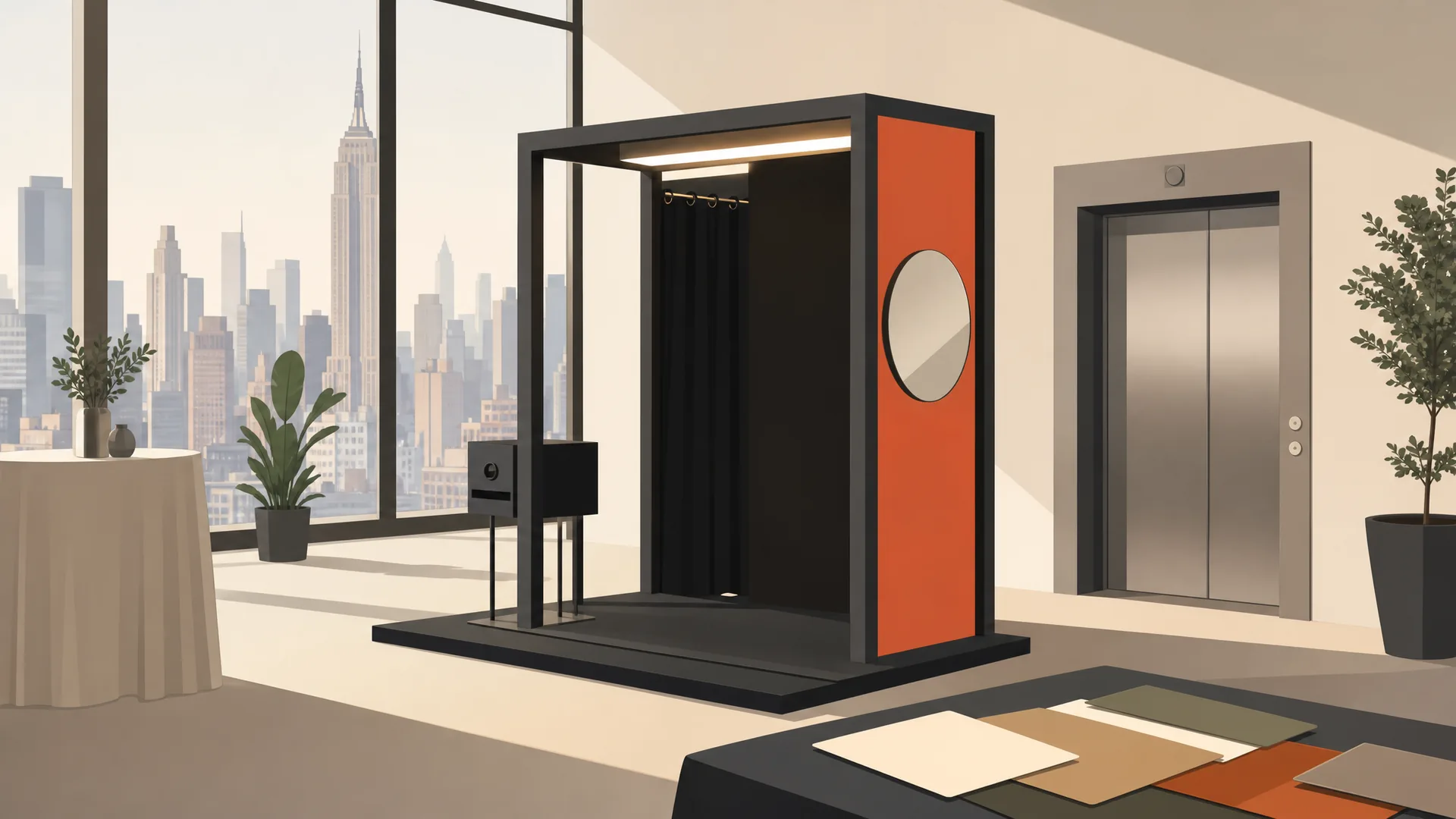
Strategic entertainment activations fill those gaps. A 360° photo booth rental positioned near the dance floor becomes a natural draw during dinner lulls. At one Manhattan wedding reception, a 360° video booth near the dance floor became the evening's centerpiece activation, guests gravitated to it between courses and kept the energy high during a stretch that can otherwise stall.
Guestbook alternatives add a personal, lasting layer. An audio guestbook for weddings lets guests record a voice message, something far more memorable than a signed card. A video guestbook as a personalized keepsake captures faces, voices, and genuine emotion. Both work beautifully in a quiet corner near the cocktail hour, where guests have a moment to be thoughtful.
Guest experience planning checklist for activations:
- Map each activation to a specific time window in the run-of-show
- Place high-energy activations (360° booth) near the dance floor or bar
- Place reflective activations (audio/video guestbooks) in quieter zones
- Confirm props, branding, and print settings at least one week before the event
Streamlined Check-In: Digital Seating Charts & Flow Planning
Check-in is your guests' first impression of the event's organization. A printed escort-card table works fine at 50 guests. At 150+, it creates a wall of people squinting at alphabetized cards while the cocktail hour waits.
36T's digital seating chart solution replaces that printed table with a sleek, searchable display. Clients who've used it at large receptions report dramatically faster check-in and fewer "where do I sit?" moments during cocktail hour. Guests type their name, see their table instantly, and move on, and you look polished from the first moment. Learn more about how a digital seating chart streamlines guest check-in.
Day-Of Coordination: What to Hand Off So You Can Enjoy the Moment
The goal of thorough planning is simple: by the day of your event, the decisions are made and someone else is executing them.
Here's what to hand off before guests arrive:
- Vendor arrival windows, each vendor should have a confirmed load-in time, a named point of contact at the venue, and a backup phone number
- Run-of-show document, shared with your venue coordinator, entertainment team, and caterer so everyone is on the same clock
- Tech setup verification, AV checks, lighting cues, and interactive entertainment elements should be tested before doors open, not during cocktail hour
- Single point of contact, designate one person (a coordinator, a trusted vendor, or a professional day-of planner) who fields logistics questions so you don't have to
Corporate planners booking galas at large NYC event spaces routinely face building management rules requiring vendor load-in to begin hours before guest arrival. Entertainment companies that handle their own staffed setup, arriving, building, operating, and striking the activation, absorb that pressure entirely. For NYC wedding photo booth setups and staffing, that full-service model means no guesswork on your end.
36T's team handles setup, operation, and breakdown at every event, so the activation is ready when guests walk in and gone before venue cleanup begins.
NYC Event Planning Guide: Tri-State Logistics You Can't Overlook
New York events don't happen in a vacuum. Whether your venue is in Manhattan, Long Island, Connecticut, or New Jersey, logistics vary significantly, and this is where first-time planners get caught off guard.
Building load-in rules vary by property and can be strict. Many Manhattan venues limit freight elevator access to specific hours, restrict vendor entry to service entrances, and require certificates of insurance before any vendor sets foot on the floor. Confirm all of this in writing, early.
Permit requirements depend on what you're doing and where. Amplified outdoor music in certain NYC parks requires a permit from the NYC Parks Department. Sidewalk activations may need a temporary use permit from the relevant borough office. Start this research at the 9–12 month mark, not the 30-day mark.
Traffic and vendor travel time are real planning variables. A vendor driving from New Jersey to a Manhattan venue on a Friday evening needs a significantly different departure time than the same drive on a Sunday morning. Build buffer time into every vendor arrival window.
Tri-state venue nuances: Long Island estates often have stricter noise curfews than city venues. Connecticut venues may mean longer travel times for NYC-based vendors, affecting setup windows. New Jersey ballrooms sometimes carry different union or staffing rules for load-in. Discuss all of this with vendors before signing contracts, not after.
Putting together a complete event planning checklist NYC hosts can trust means going beyond the basics. It means sequencing entertainment so guests stay energized, choosing vendors who know the city's quirks, and handing off enough on the day that you can actually be present for the moments you've been planning for months.
If your checklist still has gaps, especially around entertainment activations, digital check-in, or vendor coordination, reach out to the 36T Event Rentals team to check availability for your date. Explore 36T's full entertainment rental menu and let us help you build a package that fits your venue, your guest count, and the experience you want your guests to remember.