Digital Seating Chart vs. Paper Cards on the Table
When you’re planning a wedding, gala, corporate party, or milestone celebration, seating is one of those details that can quietly make or break the guest experience. A clear seating setup helps people find their place quickly, keeps the room organized, and sets the tone for the rest of the event. But when it comes to presentation, many hosts end up deciding between a digital seating chart and traditional paper cards on the table.
Both options can work, but they create very different experiences. If you’re trying to decide which one is better for your event, it helps to think about more than just looks. You’ll want to consider convenience, flexibility, guest experience, and how much work you want to take on before the big day.
What is a digital seating chart?
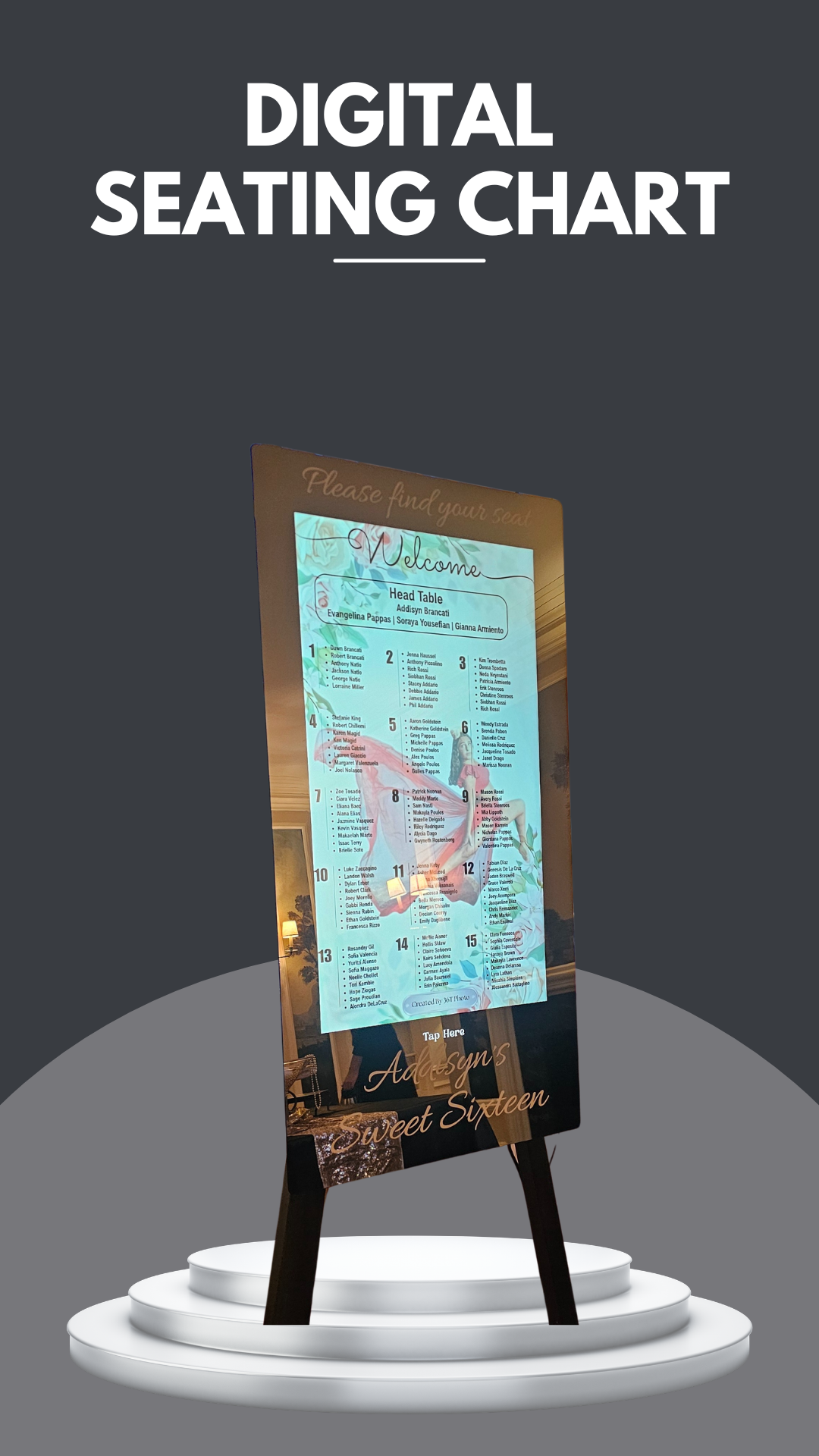
A digital seating chart is a modern, display-based way to show guests where they should sit. Instead of printing individual paper cards or signs for each table, the seating information is shown on a screen or digital display. Guests can easily search their name, find their table, and move on without needing to ask the planner, venue staff, or host for help.
At 36T Event Rentals, our Digital Seating Chart service is designed to make that process feel polished and easy. It gives your event a sleek, high-end look while helping guests get seated with less confusion and less crowding at the entrance.
What are paper cards on the table?
Paper cards on the table are the more traditional option. These are typically printed place cards, escort cards, or table number cards that guide guests to their assigned seats. Depending on the event, they may be displayed on a welcome table, arranged alphabetically, or placed directly at each table setting.
They’re familiar, affordable, and can be styled in a way that matches your event theme. But they also come with a few limitations, especially if anything changes last minute.
Digital seating chart vs. paper cards on the table: the real differences
If you’re comparing the two, here’s the simplest way to think about it: paper cards are traditional and straightforward, while a digital seating chart is more flexible, modern, and guest-friendly.
1. Easier updates
This is one of the biggest advantages of a digital seating chart. Guest list changes happen all the time. Someone cancels. A plus-one is added. A family member needs to sit closer together. With paper cards, even small changes can mean reprinting, reordering, or hand-editing everything. That takes time and can add stress.
With a digital seating chart, updates are much easier to manage. If your guest list changes, you can adjust the display without rebuilding the entire setup from scratch.
2. Better flow at the entrance
Anyone who has been to an event with a crowded escort card table knows the problem: guests gather in one spot, try to find their names, and sometimes end up blocking the entrance. A digital seating chart helps reduce that bottleneck. Guests can quickly check the screen, find their table, and head inside with less waiting.
That smoother flow is especially helpful for weddings and large events where timing matters. When guests move through the space more efficiently, the whole event feels more organized and intentional.
3. More polished presentation
Paper cards can be beautiful, especially when they’re designed with high-quality materials and tied into the overall décor. But if you’re going for a more upscale, modern look, a digital seating chart often makes a stronger impression. The clean presentation feels contemporary and can tie in beautifully with your venue design, lighting, and signage.
For events with a sleek aesthetic, a digital display can feel like part of the decor rather than just a functional detail.
4. Less waste
If sustainability matters to you, a digital seating chart can be a smart choice. Traditional paper cards often involve printing extra copies, using cardstock, and sometimes discarding materials if the seating plan changes. A digital option reduces paper waste and helps cut down on the number of printed items needed for the event.
That said, paper cards can still be eco-conscious if they’re made thoughtfully. Recycled materials and minimalist printing can help. But if you want the most streamlined option, digital usually wins here.
5. Budget and customization
Paper cards may be less expensive upfront, especially for smaller events. If your guest list is simple and your seating plan is unlikely to change, they can be a practical solution. They also allow for a lot of creative styling with calligraphy, printed textures, and custom designs.
A digital seating chart may have a higher initial investment, but it can save time, reduce reprint costs, and create a more elevated guest experience. For hosts who want a premium look without the hassle of constant revisions, the value is often worth it.
When paper cards still make sense
Digital isn’t automatically better for every event. Paper cards on the table still work well when:
- The guest count is small and easy to manage
- The event is highly traditional and calls for classic paper details
- You want a handmade, personal feel
- You already have a simple seating setup with no expected changes
For intimate dinners, showers, or smaller celebrations, paper cards can feel warm and personal. The key is making sure they are clearly organized and easy to read.
When a digital seating chart is the better choice
A digital seating chart is usually the better fit if your event has a larger guest list, a busy entrance, or a modern design style. It’s also a great choice if you know your seating chart may need last-minute edits. Weddings with multiple family dynamics, corporate events with VIP seating, and galas with complex table arrangements all benefit from the flexibility of a digital display.
It’s not just about convenience. It’s about creating a better first impression. Guests notice when an event feels easy to navigate, and that first moment often sets the tone for everything that follows.
How to decide what’s right for your event
If you’re still torn between the two, ask yourself a few simple questions:
- How many guests are attending?
- Are seating assignments likely to change?
- Do you want a traditional or modern presentation?
- Is your priority style, convenience, budget, or flexibility?
If you want something timeless and hands-on, paper cards might be the answer. If you want a cleaner, more efficient experience that feels premium from the moment guests arrive, a digital seating chart is probably the better fit.
Final thoughts
There’s no one-size-fits-all answer when it comes to digital seating chart vs. paper cards on the table. The right choice depends on your event style, guest count, and how much flexibility you need during planning. But if you’re aiming for a more modern, seamless, and guest-friendly arrival experience, digital is hard to beat.
At 36T Event Rentals, we help hosts create memorable, stress-free events with services that go beyond just seating. From digital seating charts and photo booths to 360 booths, audio guestbooks, video guestbooks, custom backdrops, and more, we’re here to help your event feel polished from start to finish. If you’re ready to explore the right setup for your next celebration, take a look at our services or reach out through our contact page.